
Subscribe
Stay in the know
Discover the latest payments news and events from Yaspa and the fintech world in our monthly newsletter.

At the recent Gaming Leaders’ Summit (GLS) in Miami, Max Collinge, Yaspa’s Vice President of Product, US, hosted a 20-minute fireside chat with an operator. The session asked one question: what can an operator learn about a new player from their very first deposit?
The answer: far more than the amount. If you missed it, here’s what was covered.
Max opened with a line from the film Jerry Maguire: “Show me the money.” In gaming, he said, the money shows up every day. Around one in 10 American adults placed an online sports bet in the past year, according to a 2025 survey by the Pew Research Center, and Americans wagered almost USD$167 billion on sports (American Gaming Association).

Every one of those bets started with a deposit. Max and the operator spent the session discussing how the deposit can show operators much more than the money. With Yaspa, it will show them the player.
To make the point, Max introduced three hypothetical players. All three:
The only visible difference was what they bet on. Player A backed college football, Player B bet on soccer and Player C on pro football. To an operator, they look almost identical. Yaspa’s Intelligent Payments shows what sets them apart.
Max then showed what each player’s bank data, shared with their consent through an open banking deposit, tells the operator:
Same deposit, three completely different stories.
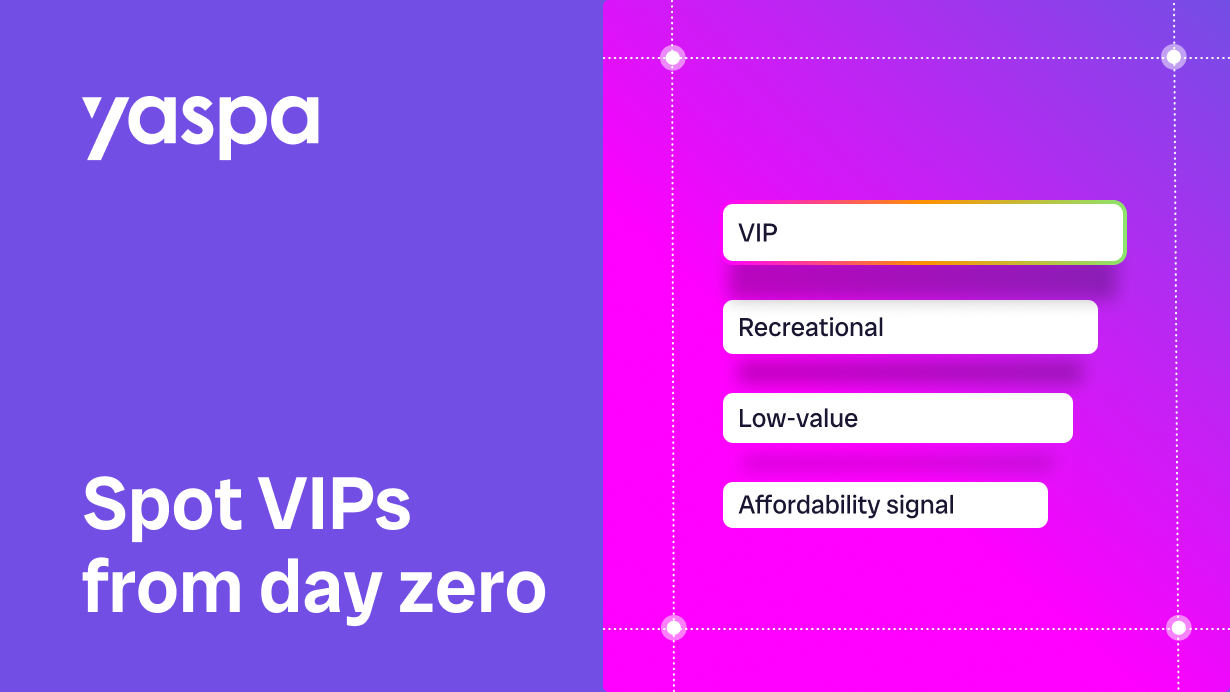
KYC confirms a player is real and old enough. An operator’s own deposit history shows what that player has done with them. Neither shows whether a new player is an A, B or C on day one, so most operators only find out in week six, after the bonus is spent.
Max scaled the example up. Say an operator brings in 10,000 new players in a month. Each one arrives looking like a USD$200 deposit and gets the same treatment, but the group is a mix of As, Bs and Cs. Splitting them on day one shows which part of the acquisition spend will pay back, and which part never will. The view also continues after sign-up: if Player A starts spreading their spend across other operators months later, the operator sees it before they churn.
For the middle of the session, Max asked the operator how this plays out in practice.
The operator was candid. Today, VIP, bonus and marketing decisions often rest on partial data, or none at all. When a new player deposits, the operator mostly knows the amount. So every new player gets roughly the same welcome offer and early experience, and the operator waits to see who stays. By the time it’s clear who’s valuable, the money is already spent.
The operator has used other Pay by Bank solutions, and gave two reasons for choosing Yaspa:
They summed it up this way: other solutions move the money, while Yaspa tells the operator who the player is as the money moves.
Asked what they would do with Players A, B and C, the operator was clear:
Max asked the audience how many had paid a welcome bonus this year to someone who turned out to have a second account. The operator explained how verified account ownership helps. If three or four new accounts deposit from the same bank account, the operator sees it at the first deposit, before a single bonus is paid. Today, most operators find out weeks later, after the money has gone.
The operator didn’t share results; they focused on what they expect to see. Instead of a success story, Max asked what number would tell them in six months that this had been a mistake. They named the measures they’ll be watching:
If those don’t move, they joked, Max will be the first to hear about it.
Max raised the obvious concern: there’s a fine line between personalizing for Player A and pushing Player B. The operator’s answer was that the signal goes to the responsible gambling team, not only to marketing, and the decision always stays with the operator. Max explained that Yaspa built its Pay by Bank product for regulated gaming, in response to source-of-funds and responsible gambling rules. He said that changes three things for operators:
Max tied it back to the theme of the session. The same signal that tells an operator to invest in Player A tells them to look after Player B. Marketing and responsible gambling teams finally work from the same picture, from day one.
The session closed with questions from the audience. Here are the practical questions operators ask us most often about this approach, with Yaspa’s answers.
Yaspa works with most US banks. The exceptions are a handful of small credit unions that Yaspa doesn’t currently support.
Integration typically takes four to six weeks, depending on the operator’s tech stack. Yaspa partners with payment platforms and CRM providers to make integration easier, and operators can also integrate directly. Turning on Intelligent Payments doesn’t change the operator’s payments integration. Yaspa’s Solutions team provides test cases and a custom checklist, and tests with the operator before launch.
Operators receive two things:
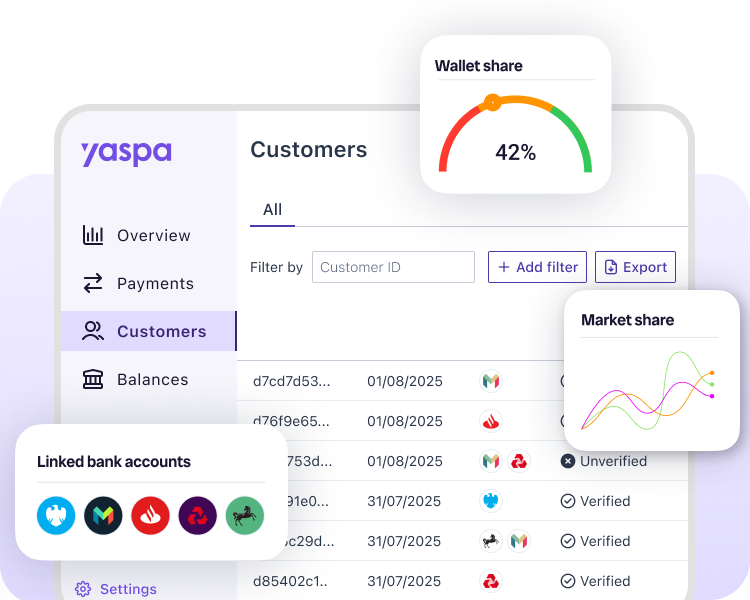
Operators can view these insights in Yaspa’s dashboard, or have them sent straight into their CRM or responsible gambling tools.
The player decides. Nothing is shared without their explicit consent, and they can end the connection at any time. If they do, the data stops and Yaspa tells the operator right away. Inside the operator’s business, marketing teams work from bands while responsible gambling teams see more detail.
Max closed by bringing the session back to where it started. The deposit has always shown operators the money. Now the same deposit can show them the player: who to invest in, who to look after and whose bonus they should never pay.
His challenge to the audience was simple. The next time a USD$200 first deposit comes in, ask: is this Player A, B or C? With Yaspa, operators can know on day one.
Thanks to our operator guest for being so open about their approach, and to everyone who joined us at GLS.
Want to see what this looks like for your players? Book a demo with the Yaspa team.
Subscribe
Discover the latest payments news and events from Yaspa and the fintech world in our monthly newsletter.
"*" indicates required fields